
THE EDIT / STAR CLUSTER BALL
First Star Cluster Ball Practice: Touch, Pace & Position
A beginner practice path for finding a repeatable push, judging pace and direction, reading the table and learning with a partner.
01 / THE EDIT
The first ten minutes have a simple goal
A first Star Cluster Ball session does not need to begin with every scoring combination. Begin by learning what one controlled push feels like. Find the release area, follow the tilt of the table and identify the three target plates. Notice the side rails and any boundary markings. Ask the host which balls belong to each side and which parts of the table are safe to touch. The practical aim of the first ten minutes is to repeat a clear action and see how it changes the ball’s stopping place.
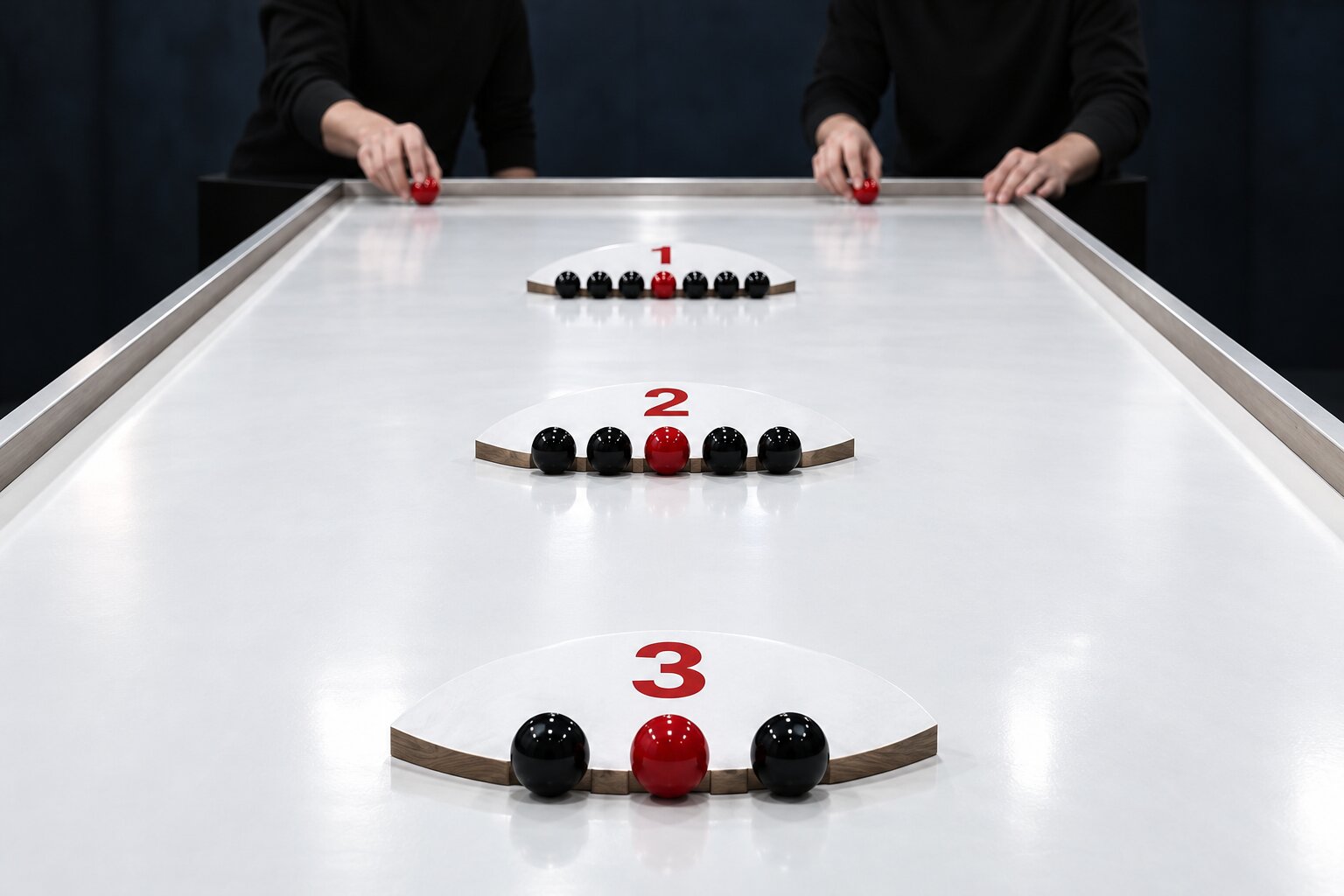
This guide is a practice sequence, not a universal competition rulebook. A published overview describes a table with three plates and commonly visible red and black balls, but the host should explain the equipment and rules for the actual session. If there is a local coaching method, use it. The suggestions below are ways to observe pace, direction and the evolving position without inventing a standard release technique or a standard score.
02 / THE EDIT
Stand where you can see the whole route
Before touching a ball, take a moment to see the table from the release end. Point out the nearest, middle and farthest target areas. Trace a possible route with your eyes, then notice anything that might interrupt it: another ball, a rail, a change in surface or the lip of a plate. A ball that appears easy to reach in a close photograph can be much harder when you must send it from the actual starting line.
Ask where players may stand and release, whether a hand may cross the boundary and who retrieves a ball after it stops. Those details matter for both safety and fairness. Keep hands away from a ball still moving and leave any disputed position untouched until the organiser has seen it. Beginners learn more when the state of the table remains visible than when people hurry to reset every imperfect attempt.
03 / THE EDIT
Make one repeatable push
Choose an unobstructed route toward a nearby, broad part of the table. Make a gentle release with the motion demonstrated by the organiser. Your first target is consistency, not an impressive score: can you send two or three balls in roughly the same direction? If the balls diverge, change only one thing on the next attempt. A small adjustment in starting alignment is easier to evaluate than changing both direction and force at once.
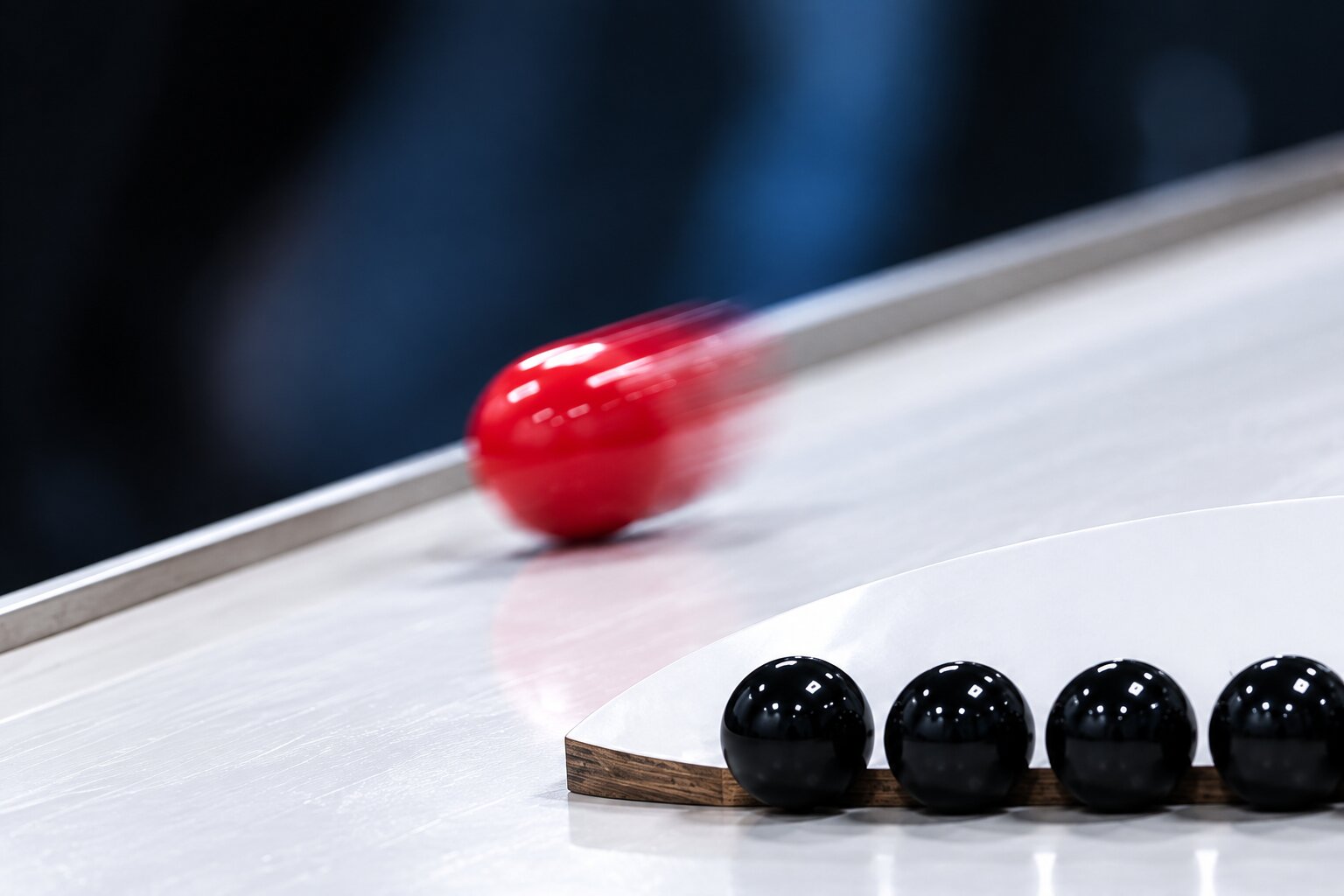
Watch the whole roll until the ball is still. Estimate where it began slowing and where it finally stopped. If it stops short, the response may be more pace, but first check whether it brushed another ball or a boundary. If it travels too far, try a smaller motion rather than pulling the hand abruptly at the end. Keep the exercise simple enough that you can explain what changed between attempts.
04 / THE EDIT
Separate direction from pace
Direction and pace interact, but practicing them separately makes feedback clearer. For direction, hold the effort approximately constant and aim at two visibly different lines. For pace, choose one route and try to stop the ball at a near and then a farther point. You are not trying to calibrate a laboratory instrument. You are creating a small set of comparisons that teaches how the table responds to your release.
The same gesture may produce a different result on another table. Surface condition, ball wear and slight changes in setup influence the roll. Do not turn one practice result into a universal distance rule. Instead, begin each new session with a few calibration pushes. The first successful sign of progress is not always hitting a target; it may be accurately predicting that your next ball will stop earlier than the previous one.
05 / THE EDIT
Introduce the target plates one at a time
Once a straight push feels familiar, select one plate and ask what qualifies as a valid landing position in this session. The public overview describes plates with different numbers of positions; that information helps you recognize the layout, but the organiser should confirm the scoring and any edge cases. Try a route with an open entry and observe how the plate changes the ball’s motion. Do not begin by aiming through a crowded line.
Move to a second plate only when you can describe why the first attempt missed or arrived. Compare the apparent opening, travel distance and angle. An advanced plate is not simply the same task from farther away; a different entrance and a ball already in place can alter the problem. A useful beginner note is “I could see the opening, but the ball reached it too quickly,” or “The pace felt right, but the line was left of the entry.”
06 / THE EDIT
Add one stationary ball
Ask a partner to place a ball in a permitted position and repeat a familiar route. Now you are practicing a real choice: go around it, stop before it, or allow a controlled contact. Start by predicting what the stationary ball will do if touched. After release, check both balls rather than following only the new one. A gentle contact may alter the arrangement more than expected.
Keep the exercise cooperative. The goal is to understand position, not to declare a winner from a single collision. If the ball falls outside a scoring area or reaches a boundary, ask how this activity handles it. Different events may have different recovery or foul procedures. Knowing when to ask is part of learning the game; it is more useful than memorizing an unverified answer from a short clip.
07 / THE EDIT
Play a tiny practice round
When each player has tried a few pushes, play a small, clearly defined round. Agree on who starts, how many balls each person uses, whether only basic positions count and when the round ends. A host may use a simplified teaching format before introducing the full event rules. State the simplification aloud so no one is surprised when they later watch a match with bonuses or a clock.
A tiny round teaches turn rhythm and attention. Before every release, each player names one possible line; after the ball stops, both describe what changed. If you keep score, have one person point to the exact position being counted. If the position is ambiguous, stop and agree on the observation before moving the balls. The point is shared understanding, not administrative perfection.
08 / THE EDIT
Learn the rules when they answer a real question
The first rule questions usually arise naturally: does a ball on the edge count, may I touch a settled ball, who receives credit if my push moves the other colour, and what happens when time expires? Ask the organiser for the written card or demonstration used for this session. Record the answer alongside the situation that prompted it. Context makes the rule easier to remember than a long list read before anyone has seen the table.
Before entering a tournament, reading the complete event regulations is still necessary. The practice round cannot establish universal scoring, fouls, tie procedures or equipment tolerances. A published article may introduce common concepts, while a formal organiser decides the version used in a particular competition. Treat a local answer as local unless it is supported by the event’s current rule document.
09 / THE EDIT
Turn mistakes into the next attempt
If a ball misses, describe one observable difference from your plan. Did it travel farther, drift to one side or touch something you had not noticed? Choose one adjustment. Repeat the route rather than replacing it immediately with a dramatic trick shot. This creates a short feedback loop: predict, push, observe, change. Beginners often gain control faster from several comparable attempts than from a collection of unrelated challenges.
The table also changes between attempts. A ball left in place may narrow the next route or create a useful contact. Notice that change before repeating. If the aim is pure technique, reset the same starting arrangement; if the aim is game sense, leave the balls and solve the new position. Tell your partner which exercise you are doing so both people judge progress by the same question.
10 / THE EDIT
End with a question for the next session
At the end of your first visit, you should be able to identify the main table features, make a controlled release and explain one way a ball changed the next player’s choices. You do not need to master every scoring pattern. Ask yourself which part felt least predictable: direction, pace, contact or reading the available positions. That answer gives the next session a useful focus.
A good second visit can begin with three calibration pushes, then one target plate, then a short round under the club’s stated rules. Watch a full match between visits if you can, but avoid copying a spectacular move without its starting position and score context. The game opens up through repeated small observations. One push begins the lesson; the arrangement it leaves behind gives you a reason to try another.
EDITORIAL NOTE
This is an editorial reading of match play, not a competition rulebook. Check the event format for scoring and watch the linked Star Cluster Ball channel for match footage.
Explore the video channel ↗